Introduction
The word gender is derived from the Latin word ‘genus ‘, which means type or kind.
Gender is a socially constructed difference between roles and responsibilities that are assigned to the gender by our family, society, and culture.
The term gender is also used to describe the differences in behavior between masculine and feminine.
For example, in India, the domestic roles and responsibilities are given to women, and the outsiders’ responsibilities are performed in the constitution of India against equality to both men and women, which provides women equality in society, education, politics, and economically by men.
Gender equality doesn’t mean that men and women should be the same, but the rights, roles, responsibilities, and opportunities will not depend on whether they are born male or female.
Causes of gender inequality
- Illiteracy
- Poverty
- Patriarchy
- Dowry
- Child Marriage
- Role of men in religious rituals
- Drawbacks of education
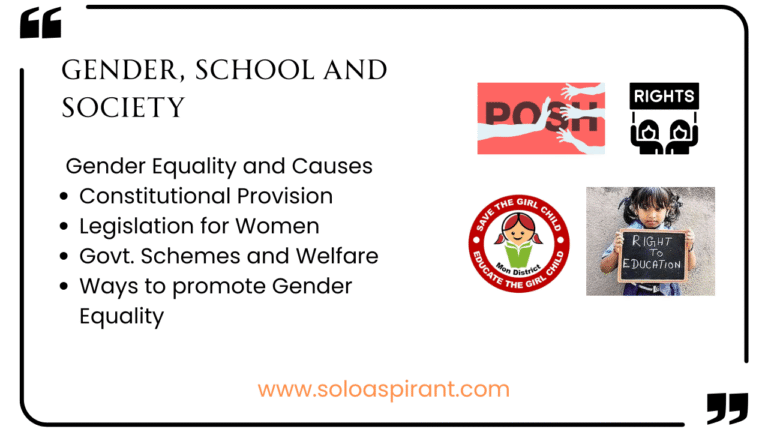
Constitutional provision for Gender Equality
The Constitution of India grants equality to both men and women. It provides women with equality in society, education, politics, and the economy.
- Article 14 equality before the law ensures equal treatment of all persons, including men and women.
- Article 16, equal opportunity in employment for both men and women.
- Article 21 A (Right to Education) – The state should provide free and compulsory education to all citizens between the ages of 6 and 14 years.
- Article 39 A – Equal right to Livelihood – Men and Women should have equal rights to adequate means of livelihood
- Article 39 D –Equal Pay for Equal Work – Equal wages for both men and women
- Article 41 – States should provide the right to work, education, and public assistance.
- Article 45 – Early childhood care and education (DPSP).
- Article 46 – Promotion of education and economic interests of SC/STs and EWS. Encourages women’s education from weaker sections.
Legislation for women
- Equal Remuneration Act of 1976 for equal pay to men and women in work
- Child Marriage Restraint Act of 1976 raises the age for marriage from 15 years to 18 years for a girl child.
- Dowry Preservation Act of 1961 for the prohibition of dowry and violence against women
- Domestic Violence Act 2005 for the protection of women from violence.
- POSH Act 2013, the prevention of sexual harassment at any workplace.
Government provision and welfare to support Women’s Education
- Beti Bachao Beti Padhao is a scheme to promote girl child education and the prevention of sex selective abortion.
- Sukanya Samridhi Account for investment for a girl child below 10 years of age.
- Women’s helpline number
- Mahila E-haat is designed to support women’s entrepreneurship and self-help initiatives.
- Maternity benefits scheme for lactating and pregnant women.
Ways to promote gender equality
- Promote gender equality at home
- Breaking the stereotypes
- Equal pay
- Equal Employment Opportunities
- Removing gender bias
- Eliminating social evils – dowry, child marriage
- Equal distribution of resources
- Equal distribution of nutrients, education, etc
- Social change
- Right to food and nutrition
- Right to work
- Right to education
Gender equality doesn’t mean that men and women should be the same, but their rights and roles will not depend on whether they are born female or male. Gender equality is when people of all genders have equal rights, opportunities, and responsibilities.

Hi, I’m Amit Kumar — the author of SoloAspirant.
I am a part-time blogger and tutor with a background in Physics and a B.Ed. Through this platform, I share study materials, notes, and PYQ PDFs curated to help aspirants prepare effectively for teaching and competitive exams.